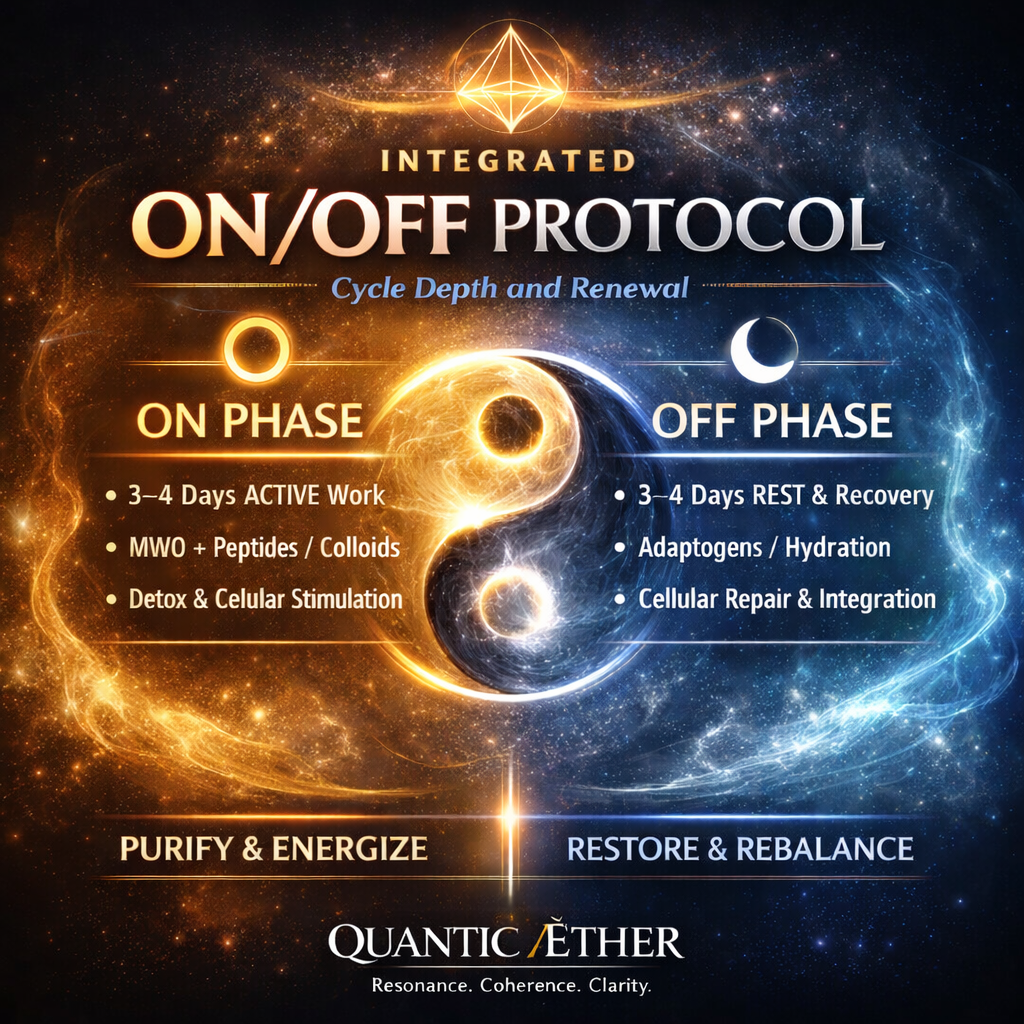
With explanations of what is being eliminated, how it works, realistic timelines, synergies, and monitoring.
🔄 General Cycle Structure
- •1 ON Day = chelation + mobilization
- •1 OFF Day = rest + regeneration + replenishment
Recommended frequency: repeat the cycle 3–9 times (12–21 days) as an intensive treatment, then transition to a maintenance phase.
🎯 What Is Eliminated / Mobilized and How
Heavy Metals
Lead (Pb), Cadmium (Cd), Aluminum (Al), Arsenic (As), Mercury (Hg)
EDTA (oral/IV)
Extracellular chelation: captures metals in blood/plasma and free calcium; promotes renal excretion.
Typical estimated rate: plasma reduction within weeks; accumulation in urine 24–48 hours after dosing.
Metals in Soft Tissues
Hg, Pb, Cd, As
DMSA + DMPS
Intracellular and extracellular chelation: mobilizes metals from organs and tissues into the bloodstream, followed by renal elimination.
Typical estimated rate: increased urinary excretion within 24–48 hours; tissue reduction after a complete cycle (weeks).
Free Radicals / Oxidative Stress
ALA + natural antioxidants
(turmeric, selenium, glutathione via precursors)
Neutralization of reactive oxygen species (ROS), mitochondrial and cellular protection against "toxic rebound."
Typical estimated rate: immediate action; mitigation of acute effects.
Biofilms / Latent Infections / Intracellular Pathogens
Colloidal silver + rectal ozone therapy + immune support
Antimicrobial action, biofilm disruption, and deep disinfection.
Typical estimated rate: improvement in microbial load within 3–7 days following the ON phase.
"Typical estimated rate" is based on medical chelation, toxicology, and detoxification studies. Results vary significantly depending on body burden, renal/hepatic function, adherence, and other individual factors.

🔥 PHASE 1 — ON DAYS
Deep Mobilization + Chelation
Objective: mobilize heavy metals, toxins, and biofilms; activate cellular energy and systemic detoxification.
🕗 08:00 — Colloidal Nano Gold (10 ml sublingual)
- •Cellular and bioelectrical stabilization
- •Prepares the nervous system for MWO therapy
🕣 08:15 — MWO v999 (21 minutes)
- •Harmonic vibrational stimulation
- •Opening of ionic channels
- •Mitochondrial activation
🕘 09:00 — Restructured Water + Light Breakfast
- •Metabolic activation without digestive overload
- •Structured water supports superior cellular transport
🕤 09:30 — 1 EDTA Capsule (500 mg)
- •Extracellular chelation of heavy metals (lead, cadmium, aluminum)
- •Initiates renal excretion pathway
🕐 13:00 — Meal Rich in Raw Turmeric + Black Pepper
- •Can be taken as capsules (3×) or added to food
- •Potent anti-inflammatory + Phase II liver support
🕔 17:00 — 1 Capsule of ALA + DMSA with Whole Grain Bread + Olive Oil
- •ALA enters the mitochondria → mobilizes mercury and improves redox balance
- •DMSA: intra- and extracellular chelation without significant toxicity
🕗 20:00 — 1 DMPS Capsule
- •Final clearance of remaining heavy metals
- •Stimulates renal and hepatic elimination
🧘 PHASE 2 — OFF DAYS
Recovery + Replenishment + Regeneration
Objective: replenish minerals, regenerate tissues, modulate inflammation, and prevent rebound effects.
🕗 08:00 — Colloidal Nano Gold (10 ml sublingual)
- •Maintains cellular activation without chelation
🕘 08:30 — Restructured Water + Genuine B-Complex + Magnesium (300 mg)
- •Nutritional support for the nervous system
- •Magnesium: antiarrhythmic, muscle relaxant, and essential cellular cofactor
🕐 13:00 — Meal + Shot of Isotonic Seawater + Vitamin K2 MK-7 (1 capsule)
- •Replenishes calcium, zinc, and selenium; directs calcium toward bones
- •K2 prevents arterial and breast tissue calcification
🕓 16:00 — Natural Vitamin E Complex (400 IU) + Natural Vitamin A + Essential Amino Acids
- •Supports epithelial, hepatic, and breast tissue regeneration; mitochondrial antioxidant protection
- •Essential amino acids provide the building blocks for cellular repair
🕔 17:30 — Rectal Ozone (low dose, 1–3 times daily)
- •Improves cellular oxygenation
- •Stimulates beneficial gut microbiota
- •Supports hepatic and intestinal detoxification phases
🌇 19:00 — Systemic Enzymes on an Empty Stomach (bromelain / serrapeptase / nattokinase)
- •Elimination of microbiofilms
- •Supports lymphatic and breast tissue drainage
- •Dissolution of subclinical fibrosis
🌙 22:00 — Colloidal Nano Silver (10 ml)
- •Antibacterial and antiviral action
- •Especially beneficial after chelation, when biofilms may be released
🔄 General Cycle Overview
- •Day 1: Deep detox → ON Day
- •Day 2: Repair and replenishment → OFF Day
- •Day 3: Deep detox → ON Day
- •Day 4: Repair and replenishment → OFF Day
Continue alternating until completing 14–21 days.
🛡️ Ongoing Support
The following are maintained throughout the entire ON/OFF protocol:
- •Restructured water: minimum 2 L/day
- •Magnesium: 300–500 mg/day (bisglycinate or chloride form)
- •K2 MK-7: 2× daily (OFF days), 1× on ON days
- •Isotonic seawater shot: 1× daily with a meal
- •Milk Thistle (Silymarin): 1 capsule with a meal (daily)
- •NAC (N-Acetylcysteine): 600–1200 mg/day
- •Rectal ozone: 1–3 times per day (on OFF days)
📋 Optional Monitoring
- •Creatinine / urea levels (renal function)
- •Blood minerals (Ca, Mg, Zn, K)
- •24-hour urine collection for heavy metals and minerals
- •Thermography / breast ultrasound (fibrosis / inflammation)
- •Symptom questionnaire (energy, digestion, inflammation, mental clarity)
⚙️ PHASE 3 — Maintenance, Deep Repair, and Long-Term Monitoring
Primary objectives: consolidate gains, allow deep tissue regeneration, prevent rebound effects, and ensure long-term monitoring.
Typical Interventions
- •Low doses of mild chelating agents if re-exposure occurs
- •Daily antioxidants (ALA, NAC, selenium, vitamin E)
- •Balanced mineral supplementation (Mg, Zn, Se, occasional seawater)
- •Anti-inflammatory diet: low in toxic load, rich in nutrients, antioxidants, and phytochemicals
- •Lifestyle: adequate rest, good sleep hygiene, moderate exercise, periodic dry sauna (1–2×/week), hydrotherapy, and lymphatic drainage as needed
- •Periodic evaluations every 3–6 months: heavy metal panels, mineral profile, renal and hepatic function, oxidative markers, and cellular function
📌 What to Document and Present to the Team / Patient
- Cycle objective (detox → repair → maintenance)
- Complete ON/OFF calendar
- What is being eliminated — with estimated excretion data per chelating agent
- What is being replenished — minerals, antioxidants, essential nutrients
- Potential risks and mitigation strategies (hypocalcemia, renal stress, demineralization, toxic rebound)
- Lab testing and monitoring plan — before the protocol, mid-cycle, after completion, and during maintenance
- Informed consent: clearly explain expected benefits, uncertainties, risks, and the need for clinical follow-up
✅ Why This Approach Is Scientifically and Integratively Sound
- •Adaptive chelation: using multiple chelating agents with different affinities allows a broader range of toxins to be mobilized — avoiding dependence on a single agent.
- •Balance between cleansing and repair: this protocol is not just about detoxifying — it also focuses on repairing mitochondria, restoring antioxidants and minerals, and supporting hepatic and renal function.
- •Cycles with rest periods: prevent overload, support homeostasis, and reduce the risk of mineral imbalance or renal toxicity.
- •Rigorous clinical monitoring: using lab tests and biomarkers allows the protocol to be adjusted to the individual patient rather than applying a one-size-fits-all dosage.
🔬 Clinical Monitoring Module
1. Which Tests to Order and How to Request Them
2. How to Interpret Results
3. What to Replenish If Abnormalities Are Found
4. When to Pause, Reduce, or Adjust the Protocol
🟡 A. Hepatic Function
Recommended Lab Tests
- •ALT (GPT)
- •AST (GOT)
- •GGT
- •Alkaline Phosphatase (ALP)
- •Total and direct bilirubin
- •Albumin
Key Interpretation
- •ALT / AST > 3× the upper limit of normal → Pause protocol for 3–5 days; indicates high hepatic stress
- •GGT > 80 U/L → Reduce DMSA / DMPS dose; possible hepatic congestion
- •Direct bilirubin > 1.2 mg/dL → Evaluate liver and gallbladder; possible retention or hepatic blockage
- •Albumin < 3.5 g/dL → Consider protein support; may indicate catabolism or inflammation
Recommended Support
- •Milk Thistle (Silymarin 200–400 mg/day)
- •N-Acetylcysteine (NAC 600–1200 mg/day)
- •Betaine + taurine (supports methylation and bile production)
🔵 B. Renal Function and Excretion
Key Lab Tests
- •Creatinine
- •Urea (BUN)
- •Glomerular Filtration Rate (GFR / eGFR)
- •Proteinuria / Microalbuminuria
Alert Values
- •Creatinine > 1.2 mg/dL (female), > 1.4 mg/dL (male) → Pause chelation for 2–3 days
- •GFR < 60 ml/min/1.73 m² → Monitor closely; reduce EDTA dose
- •Urea > 50 mg/dL → Monitor hydration; provide renal support
Recommended Support
- •Restructured water + daily isotonic seawater shot
- •Magnesium (300–500 mg/day)
- •Herbal infusions of dandelion, nettle, or horsetail
🧲 C. Mineral and Trace Element Panel
How to Request
- •"Blood mineral panel" or "Trace element profile"
- •24-hour urine mineral analysis (after DMSA / EDTA)
Essential Parameters
- •Calcium (Ca)
- •Magnesium (Mg)
- •Potassium (K)
- •Zinc (Zn)
- •Selenium (Se)
- •Sodium (Na)
- •Copper (Cu)
- •Phosphorus (P)
- •Lithium (optional)
- •Manganese (Mn)
Practical Interpretation
- •Calcium < 8.6 mg/dL → Add bioavailable calcium (citrate 500 mg/day) + K2
- •Calcium > 10.5 mg/dL → Discontinue K2
- •Magnesium < 1.7 mg/dL → Mg bisglycinate 300–500 mg/day
- •Magnesium > 2.5 mg/dL → Adjust as appropriate
- •Zinc < 65 µg/dL → Add Zn bisglycinate (25–30 mg/day)
- •Selenium < 60 µg/L → Add Se (100–200 mcg/day, selenomethionine form)
- •Selenium > 150 µg/L → Potentially toxic; reduce or discontinue
- •Potassium < 3.5 mmol/L → Increase potassium-rich foods; supplement with caution
- •Potassium > 5.2 mmol/L → Pause all potassium supplementation
🔴 D. Heavy Metals
Specific Testing
- •"Post-chelation 24-hour urine heavy metals panel"
- •After 500 mg EDTA / 250 mg DMSA
- •Measure: Pb, Hg, Cd, Al, Ni, As, Ti
Specialized Laboratories (Spain / EU)
- •Echevarne
- •Synlab
- •Lab Bioclinic
- •Doctor's Data (USA) — if accessible
Useful Interpretation
- •If heavy metals remain elevated after 2–3 cycles: continue with ON phase
- •If no detectable metal burden remains: reduce frequency and transition to maintenance phase (1 ON day every 3 days)
🧪 E. Additional Functional Biomarkers
- •Homocysteine → Evaluates methylation status / B12 / folate levels
- •High-sensitivity CRP (C-Reactive Protein) → Detects subclinical inflammation
- •Thyroid panel (TSH, free T3, free T4) → Assesses iodine and heavy metal influence on thyroid function
- •Ferritin → Flags inflammation or latent anemia
🧴 Safe Replenishment Based on Lab Results
- •Magnesium → Mg bisglycinate 300–500 mg (preferably at night)
- •Zinc → Zn bisglycinate or picolinate 25 mg/day
- •Calcium → Calcium citrate + K2 (never supplemented alone)
- •Selenium → Selenomethionine 100–200 mcg/day
- •Glutathione → NAC 600–1200 mg or liposomal glutathione
- •Amino acids → MAP or plant-based formula 5–10 g daily
- •Electrolytes → Isotonic seawater 1×/day with a meal
🛑 When to Stop or Adjust the Protocol
- •ALT/AST > 3× upper limit of normal → Pause DMSA/DMPS for 3 days
- •Creatinine > 1.3 mg/dL / GFR < 60 → Pause EDTA; reinforce renal support
- •Calcium < 8.5 mg/dL with symptoms → Add calcium; temporarily pause K2
- •Dizziness, arrhythmia, or sudden fatigue → Assess electrolytes and renal markers; pause for 48 hours
- •Severe Herxheimer reaction (fever, vomiting, diarrhea) → Double fluid intake + 24–48 hours of rest + rectal ozone therapy